
Indicators I use
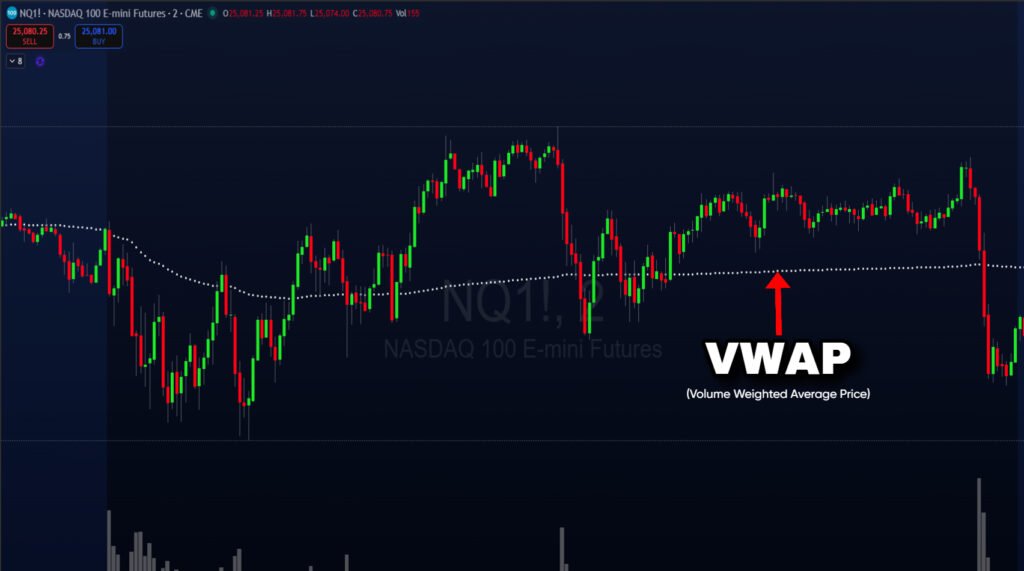
VWAP serves several important functions:
Support & Resistance: Some traders use VWAP as a dynamic support and resistance level.
Benchmarking: It provides a benchmark for traders to assess their execution quality. Buying below VWAP or selling above VWAP is generally considered a good execution.
Order Execution: Large institutions use VWAP to execute large orders over time, minimizing market impact and achieving an average price close to the VWAP.
Identifying Value: VWAP can help identify areas of value. Prices trading consistently above VWAP may indicate a bullish trend, while prices below may suggest a bearish trend.
While a valuable tool, VWAP has limitations:
Lagging Indicator: VWAP is based on past data and may not accurately predict future price movements.
Single-Day Indicator: It resets at the beginning of each trading day, limiting its use for longer-term analysis.
Susceptible to Manipulation: Large traders can potentially manipulate the price towards the end of the day to influence the VWAP.
Less Effective in Choppy Markets: In volatile or sideways markets, VWAP signals can be less reliable.
VWAP is a powerful tool for understanding price action and gauging market sentiment. By understanding its calculation, importance, and limitations, traders can effectively incorporate VWAP into their trading strategies to improve execution and identify potential trading opportunities. Remember to always use VWAP in conjunction with other indicators and risk management techniques for optimal results.
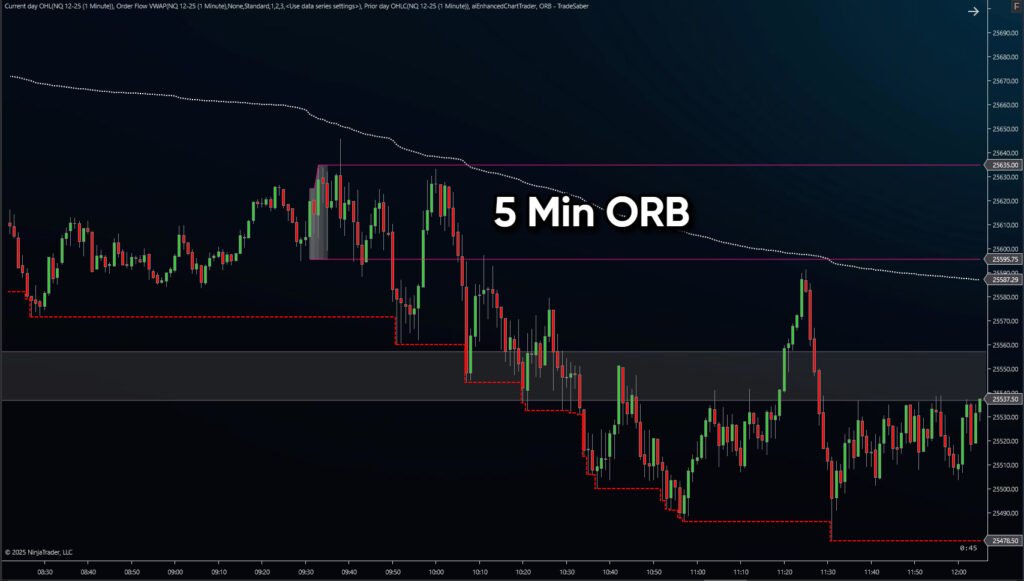
The 5-Minute Opening Range Breakout (ORB) strategy is a popular intraday trading approach designed to capture momentum at the start of the trading session. It focuses on identifying and trading breakouts that occur shortly after the market opens, when volume and volatility are at their peak.
How It Works:
- Define the Opening Range:
During the first five minutes after the market opens, mark the high and low of that initial 5-minute candle. This becomes your opening range. - Set Your Breakout Levels:
- A break above the opening range high signals potential bullish momentum.
- A break below the opening range low signals potential bearish momentum.
- Enter the Trade:
- Go long when price breaks and holds above the opening range high.
- Go short when price breaks and holds below the opening range low.
Confirm the move with strong volume or momentum indicators to avoid false breakouts.
- Set Targets and Stops:
- Stop loss: The amount you are willing to lose per trade (to limit risk).
- Profit target: A fixed R:R (e.g., 2:1) or dynamic targets based on key intraday levels such as VWAP, pre-market highs/lows, or prior day levels.
- Manage the Trade:
Once the trade moves in your favor, consider scaling out partial profits or trailing your stop to lock in gains as momentum continues.
Why It Works:
The ORB strategy leverages the initial surge in institutional volume and volatility that defines the market open. By trading the breakout from a well-defined range, traders can capture quick, high-probability moves early in the session.